 Hey Tomo
Customer engagement6 min read
Why WhatsApp is the New Storefront: How Automated Conversations Bring Customers Back
Your customers already spend their day on WhatsApp. The businesses they return to are the ones that show up there with the right message at the right moment, and never one more than they need.
In this article
Walk down any market street in India and you will see it. The kirana owner taking orders on WhatsApp between customers. The salon confirming tomorrow's slots with a quick message. The chemist sending a photo of the strip to check the right medicine. Nobody planned this. Customers simply went where they already were, and businesses followed.
That is why we call WhatsApp the new storefront. It is the counter your customers can walk up to from their sofa, at any hour, without downloading anything new.
Why customers would rather hear from you on WhatsApp
WhatsApp is where India talks. Back in 2019 the company said it had 400 million users in India, its biggest market anywhere1, and the number has only grown since. For most of your customers, it is the first app they open in the morning and the last one they check at night.
Three things make it different from SMS or email:
- Instant access. There is no inbox to dig through and no spam folder to rescue you from. Your message sits right next to messages from family and friends.
- It gets seen, and seen quickly. People check WhatsApp all day, so a useful message is usually opened soon after it arrives, while a promo email can sit unread for days.
- It is a real conversation. A customer can reply "Can I come at 5 instead?" and get an answer. An SMS from a header like AB-SHOPPE is a one-way street. A chat is a two-way one.
A storefront is not a billboard. It is a place where people ask, decide and come back.
"Automated" can sound cold. Done well, it is the opposite. It is your business remembering things for your customer, so they do not have to. Here are the three moments where it helps most.
Instant order updates
The moment an order is confirmed, packed or out for delivery, the customer knows. No more "Bhaiya, where is my parcel?" calls, and fewer worried customers.
Each update is short, about their order, and arrives exactly when something changes. It is the kind of message people are glad to get.
Booking in the chat
Instead of "call us between 10 and 6", the customer taps a time that suits them, right there in WhatsApp. The booking is confirmed in seconds, even when you are busy with someone else.
Timely reminders
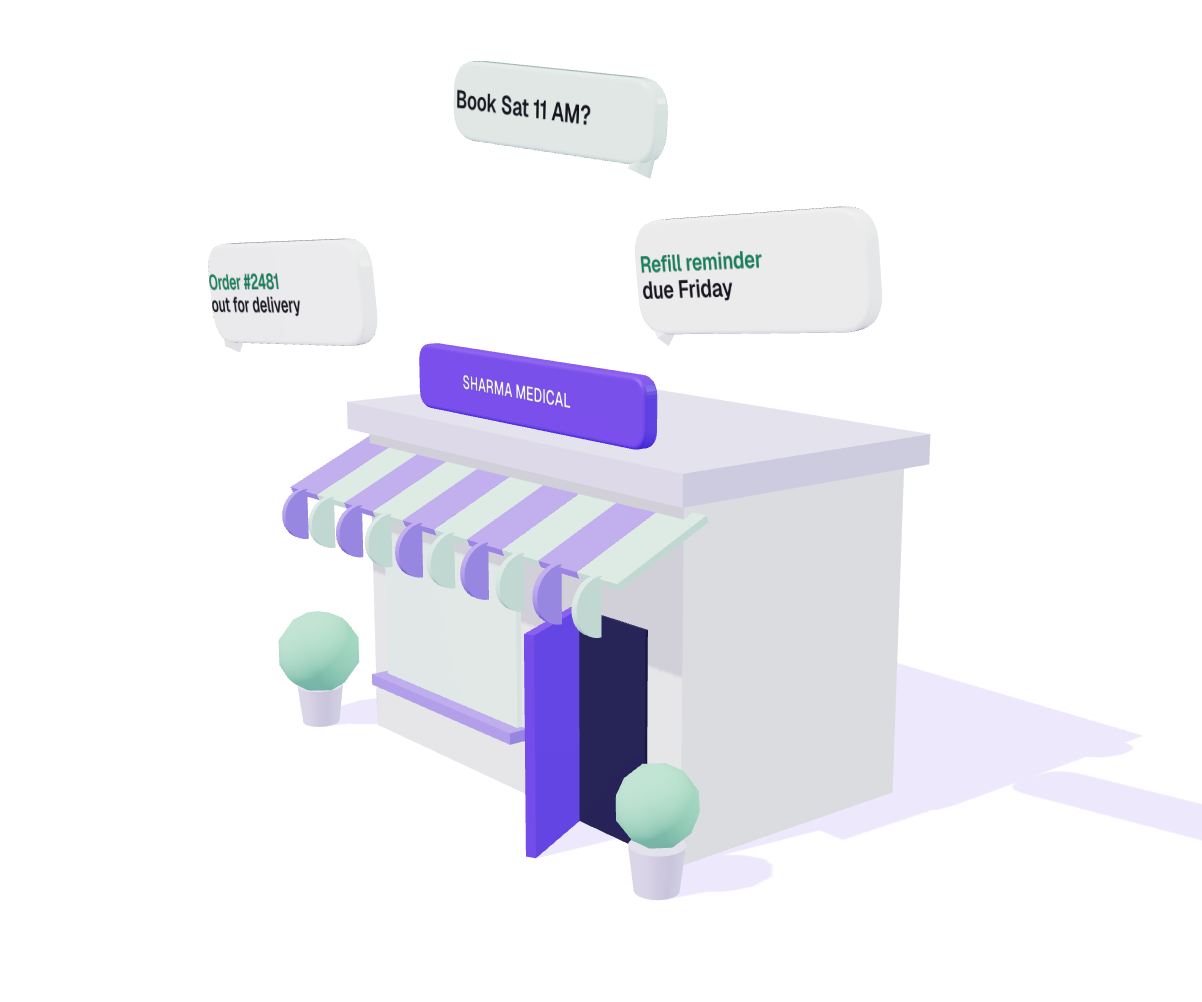
This is where small businesses win big. A pharmacy can remind a regular customer that their monthly prescription is due for a refill a few days before it runs out. A salon can say "It has been five weeks since your last haircut. Shall we book Saturday?" A tuition centre can remind parents about the fee date or a test.
None of these feel like marketing to the customer. They feel like service. And service is exactly what brings people back: the customer who gets a refill reminder buys the refill from you, not from the shop down the road.
Helpful messages, not spam
Here is the hard truth. WhatsApp works because people trust it. The fastest way to lose a customer is to flood their chat with "MEGA SALE!!!" messages every other day. They will mute you, block you or report you, and you will have turned your best channel into noise.
Spam muted after 3 days
About the shop, at odd hours, to anyone on the list.
Helpful opened and answered
About the customer, at the right moment, to people who said yes.
The difference between spam and a welcome message comes down to three questions:
- Is it about them? "Your order is out for delivery" beats "Check out our new arrivals" every time.
- Is it the right moment? A refill reminder three days before the strip runs out is helpful. The same message a month late is useless.
- Did they say yes? Only message people who have agreed to hear from you.
Send fewer messages, at better moments, to people who asked for them.
Respect is not just good manners. It is also the rule. A few habits keep you on the right side of your customers and of the law:
- Ask first. Get clear consent before you send anything beyond what the customer asked for, and keep a record of it.
- Make leaving easy. A customer should be able to stop messages by just saying so, in their own words. Whether they type "stop", "band karo" or "mat bhejo", it should work at once.3
- Keep quiet hours. Nobody wants a promo at 11 at night. Send offers and reminders during the day and keep late hours for things the customer is waiting on, like an order update.2
- Never market to children. If a customer is under 18, offers are off the table.
Follow these and something good happens: people stop seeing you as a sender and start seeing you as a shop they know.
Where to start this week
You do not need a big plan. Pick one moment where your customers often call or worry, and turn it into a message:
- Order confirmed
- Out for delivery
- Booking reminder
- Refill due
- Thank you after a visit
Start with one, see how customers respond, and add the next. Within a few weeks you will notice fewer "where is my order" calls, fewer missed appointments and more familiar names coming back.
Let Tomo handle the reminders
Hey Tomo helps small businesses send the right WhatsApp message at the right time: order updates, bookings in the chat and reminders your customers are glad to get. Consent, easy opt-out and quiet hours are built in, so every message stays welcome. Let Tomo do it for you, or build it yourself.
Text of this article
Copy the full text to read later or share with your team.
Notes
- TechCrunch, "WhatsApp reaches 400 million users in India, its biggest market", 26 July 2019. techcrunch.com ↩
- In Hey Tomo, offers and reminders keep daytime quiet hours. Only service messages the customer is waiting on, such as an order update, can go out at any hour, and only if the business turns that on. ↩
- A stop request works in any language. Once a customer opts out, no more offers or reminders go to them until they choose to hear from you again. ↩